Copper vs stainless steel samovar: how to choose the best electric samovar
The “best samovar” is not the same for everyone; the right choice depends on where you use it, how many people you serve and how much time you want to spend on care. This guide first compares copper and stainless steel bodies, then lists what to look for in a good electric samovar.
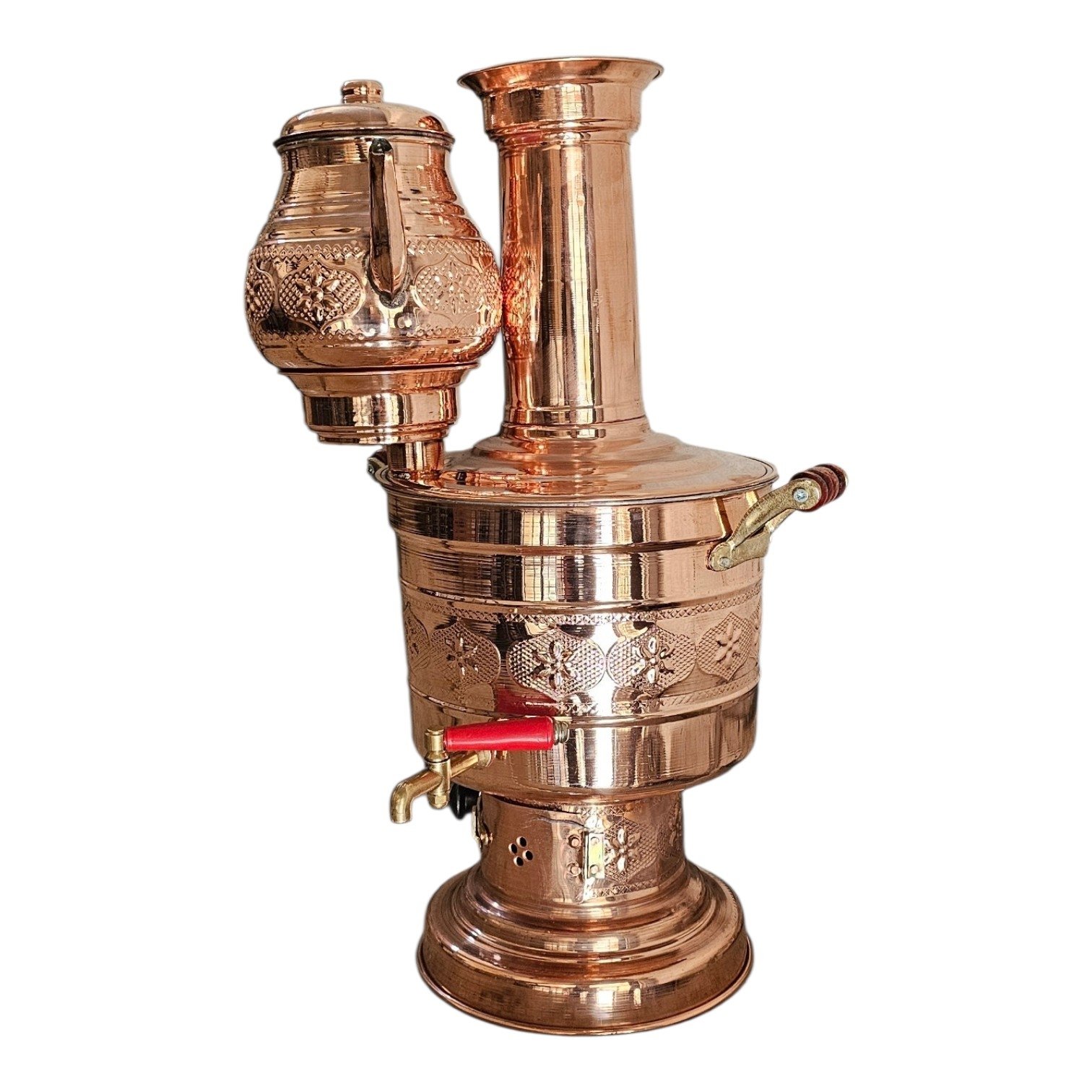
Copper samovar
- Heat conduction: copper conducts heat very well and spreads it evenly through the body.
- Look: a traditional, handcrafted look that adds value to the table and the display.
- Care: the outside darkens naturally over time; polished models are polished now and then, antique and oxidised finishes are only wiped with a dry cloth.
- Water contact: in copper vessels the inner surface that touches water is traditionally tinned. For electric copper models, check the inner-surface material in the product information.
Stainless steel samovar
- Durability: stainless steel resists knocks and heavy daily use.
- Care: no polishing needed; wiping with a soft cloth and regular descaling are usually enough.
- Look: modern and plain; it suits office, café and hotel kitchens.
- Material quality: the steel grade (e.g. food-grade stainless steel) and sheet thickness should be stated in the product information.
In short: which suits whom?
- If a traditional look, a gift and an elegant table are your priority: copper.
- If low care and heavy, practical daily use are your priority: stainless steel.
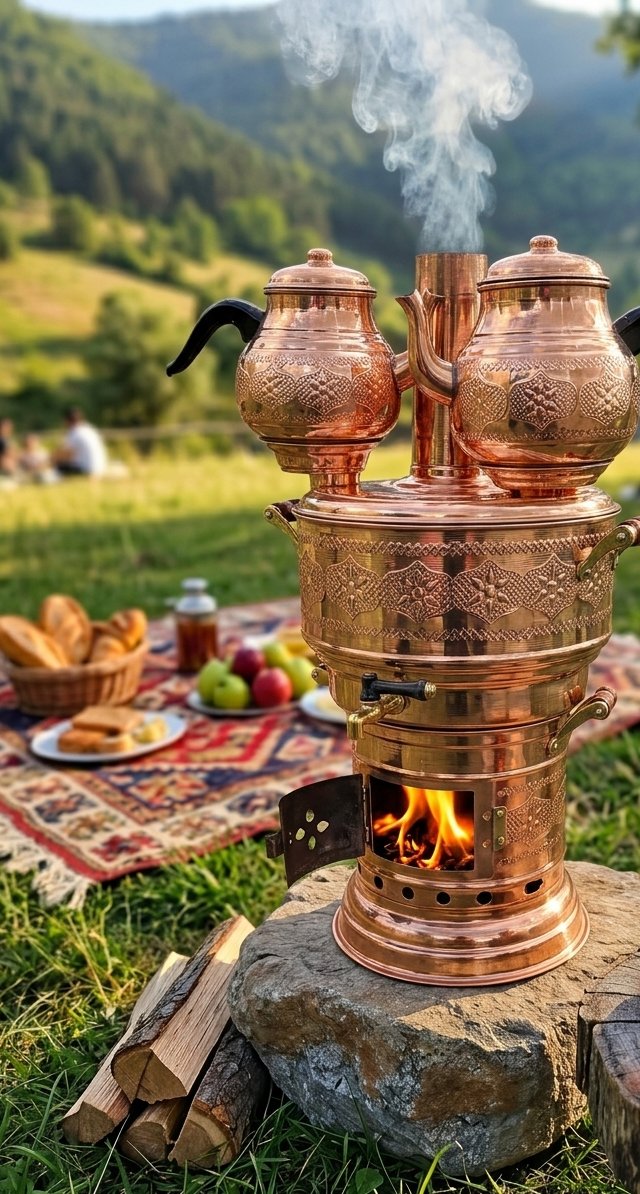
- If you want tea over a wood fire in the garden, on picnics and camping: a wood-fired copper samovar.
How to choose the best electric samovar: checklist
- Capacity: choose for the number of people you serve most often (2–4 L for a small home, 5–7 L for a large family, 10 L and up for businesses).
- Power (watts): household models are usually 1,000–2,200 W; higher power heats faster but draws more current.
- Thermostat and keep-warm: keeps the water hot without boiling it constantly.
- Dry-boil protection: cuts the heater when the water runs out.
- Concealed element: makes descaling easier.
- Tap, teapot and handles: a non-drip tap and sturdy handles that stay cool.
- Documents: CE marking, warranty and spare parts/service availability.
Frequently asked questions
Is a copper or a stainless steel samovar better?
They meet different needs. Copper offers a traditional look and good heat conduction but its outside needs care. Steel suits heavy daily use with less care.
Does a stainless steel samovar rust?
Good-quality stainless steel does not rust in normal use; keeping the tank dry, descaling regularly and avoiding abrasives still protect the surface.
Do you sell electric copper samovars?
Our electric copper and stainless steel samovars are coming soon. Write to us on WhatsApp to pre-order or ask.