How to light and use a wood-fired samovar
In a wood-fired copper samovar the fire burns in a chamber that runs through the middle of the body, and the heat passes straight into the surrounding water. These steps apply to all our models from 5 to 10 litres.
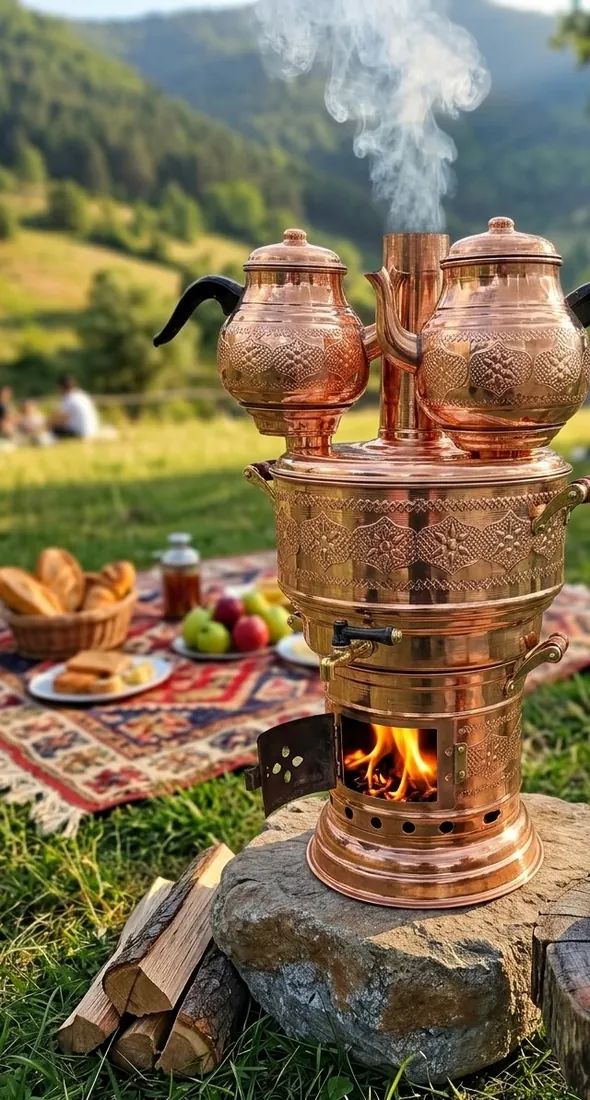
Lighting the samovar and brewing tea, step by step
- 1
Prepare the spot
Place the samovar in an open, well-ventilated place such as a garden, open balcony, terrace or campsite, on a flat, stable, non-flammable surface. Keep dry grass, fabric and anything flammable away.
- 2
Fill the water tank
Open the lid and fill the tank with clean water above the level of the tap. Never light the samovar without water; an empty tank damages the copper and the tin lining when it heats up.
- 3
Load the fire chamber
Put paper or thin kindling at the bottom of the central fire chamber and finger-thick pieces of dry wood on top. Damp wood makes a lot of smoke and slows heating.
- 4
Light the fire and fit the chimney
Light the fire through the air vent at the bottom. Once the wood catches, fit the chimney on top of the chamber; it improves the draught and sends the smoke upwards. Never use liquid fuel, petrol or cologne.
- 5
Boil the water and place the teapot
The water starts to heat within a few minutes. When it boils, remove the chimney and set the teapot on top of the samovar; the steam from below keeps the tea brewing.
- 6
Keep the fire under control
Top up the tank as the water goes down and add wood a little at a time if needed. Do not build up the fire when the tank is low.
- 7
Putting it out and cleaning
When you are done, stop adding wood and let the fire die out on its own. Once the samovar is completely cool, empty the ash, drain the remaining water through the tap, and wash and dry the body with lukewarm water.
Everyday tips
- Before first use, fill the tank, boil the water once and pour it away; then refill with clean water for tea.
- Put the tea leaves in the teapot, add some hot water from the tank, set the teapot on top of the samovar and let it brew.
- Hold the samovar steady when drawing hot water from the tap; never touch the hot body or chimney with bare hands.
- During long tea sessions, check the water level and refill when it drops; do not build up the fire when the tank is low.
- For large groups, the 10-litre models with two teapots make it easy to brew two strengths at once.
Not sure which size suits you? See our guide on what size samovar to choose; for fuel, see the best wood for a samovar; and for current prices, see copper samovar prices.
Caring for a copper samovar
- After each use, once the samovar has cooled, empty the ash; ash combined with moisture stains copper.
- Do not leave water standing in the tank; drain it through the tap and leave the lid open to dry the inside.
- Hand-wash the body with lukewarm water and a soft sponge. Do not use steel wool, bleach or a dishwasher.
- If limescale builds up, fill the tank with water and vinegar, leave it for a while, then rinse well. Details: how to clean a copper samovar.
- It is natural for copper to darken over time. Polished models can be shined with copper polish; wipe antique and oxidised models with a dry cloth only.
- If you will not use it for a while, store the samovar dry and covered, with its parts separated.
Frequently asked questions
What wood goes in a samovar?
Dry, finely split wood works best. Oak, beech, fruit-tree branches and dry kindling are all suitable. Do not use painted, varnished or wet wood.
How long does a samovar take to boil?
It depends on the capacity, how dry the wood is and the weather. Small models boil fairly quickly; 10-litre models take a little longer.
Why is the inside of a samovar tin-lined?
Tinning the copper surface that touches the water is the traditional practice for safe everyday use. If the tin wears over time, a tinsmith can re-tin it.
How do you polish a copper samovar?
On polished models, wipe the outside with copper polish or a lemon-and-salt mix, then rinse and dry. Antique and oxidised finishes are not polished; just wipe them with a dry, soft cloth.
Can a samovar be lit indoors?
No. Burning wood produces smoke and carbon monoxide. Never light the samovar indoors, in a tent or on an enclosed balcony.