Copper samovar tin lining
All our samovars are tin-lined on the inner surface that touches water, and our samovar teapots are tin-lined inside too. Tinning the inside of copper vessels is a traditional practice. This guide explains how to protect the tin lining and when re-tinning becomes necessary.
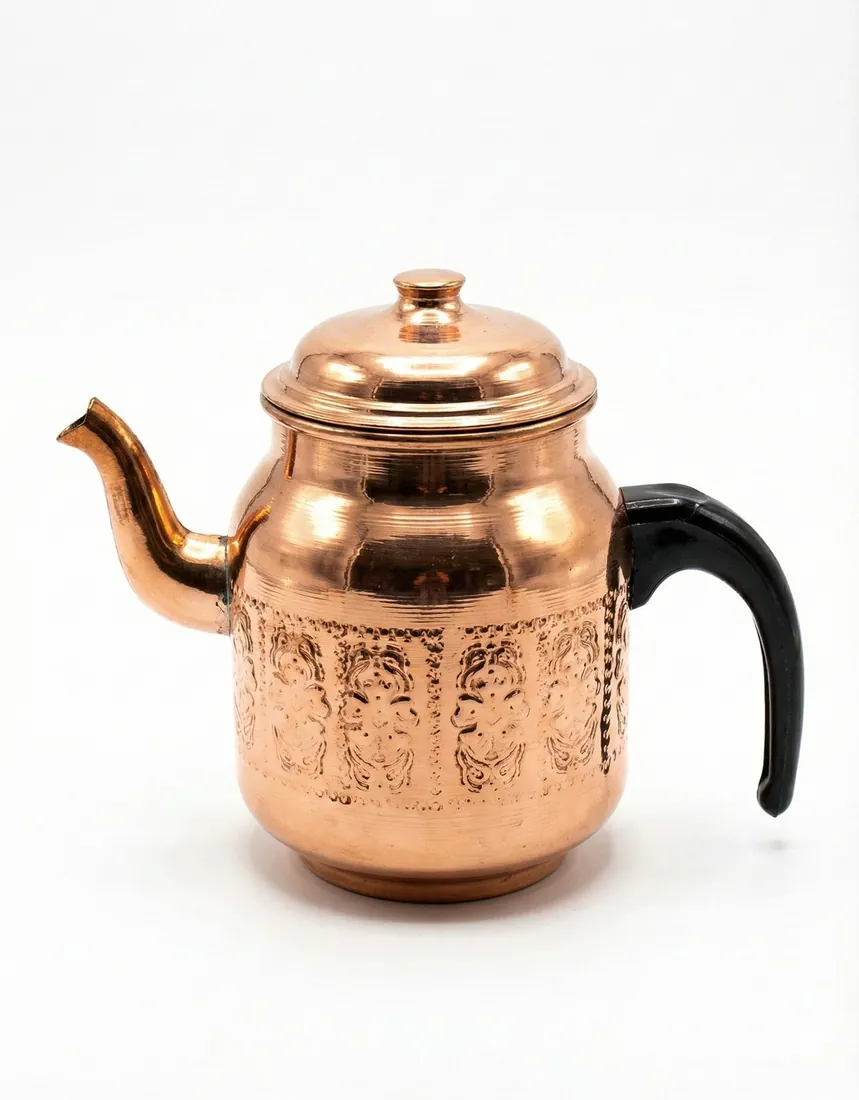
Why is tin important?
Tin is a thin coating that keeps the copper from direct contact with water and tea. In a samovar the inside of the water tank is tinned; in a teapot, the inside of the teapot. The outside is copper and darkens naturally over time.
To protect the tin
- Never heat the samovar or teapot without water; an empty tank damages the tin when it gets hot.
- Do not scrub the inside with steel wool, hard brushes or abrasive powder.
- Use polishing mixes such as lemon and salt on the outside only.
- After use, empty the water and let the inside dry; do not leave water standing in it.
When does it need re-tinning?
Tin can wear over time depending on use and care. If reddish copper starts to show through the silvery tin on the inside, the tin is getting thin. Then you can take the samovar or teapot to a tinsmith to be re-tinned.
Tinning is a craftsman’s job that involves cleaning the old coating, heating the vessel and applying new tin; it is not done at home.
Our tin-lined products
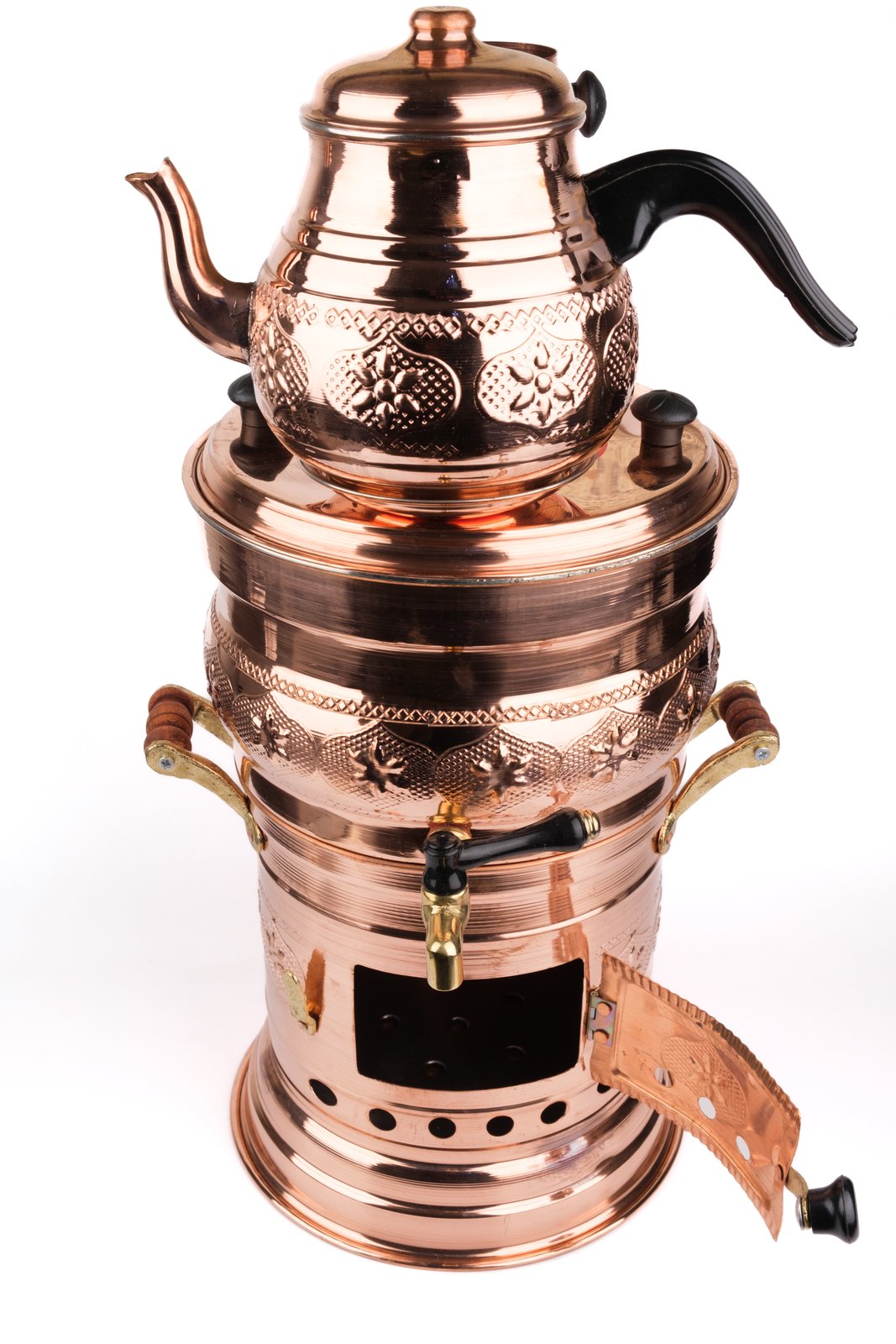 5 LSale
Copper Samovar 5 L with Teapot – Wood-Fired
5 L
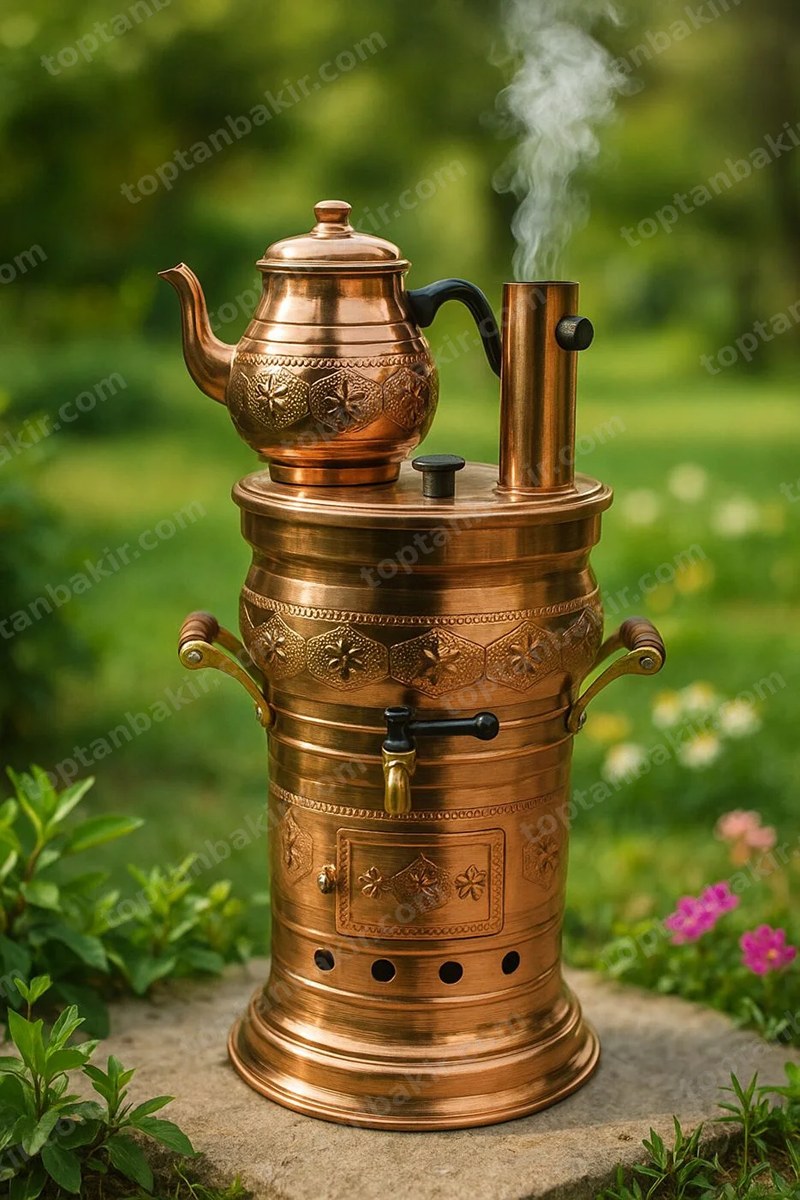 7 L
7 LWood-Fired Copper Samovar 7 L – Removable Fire Base
7 L
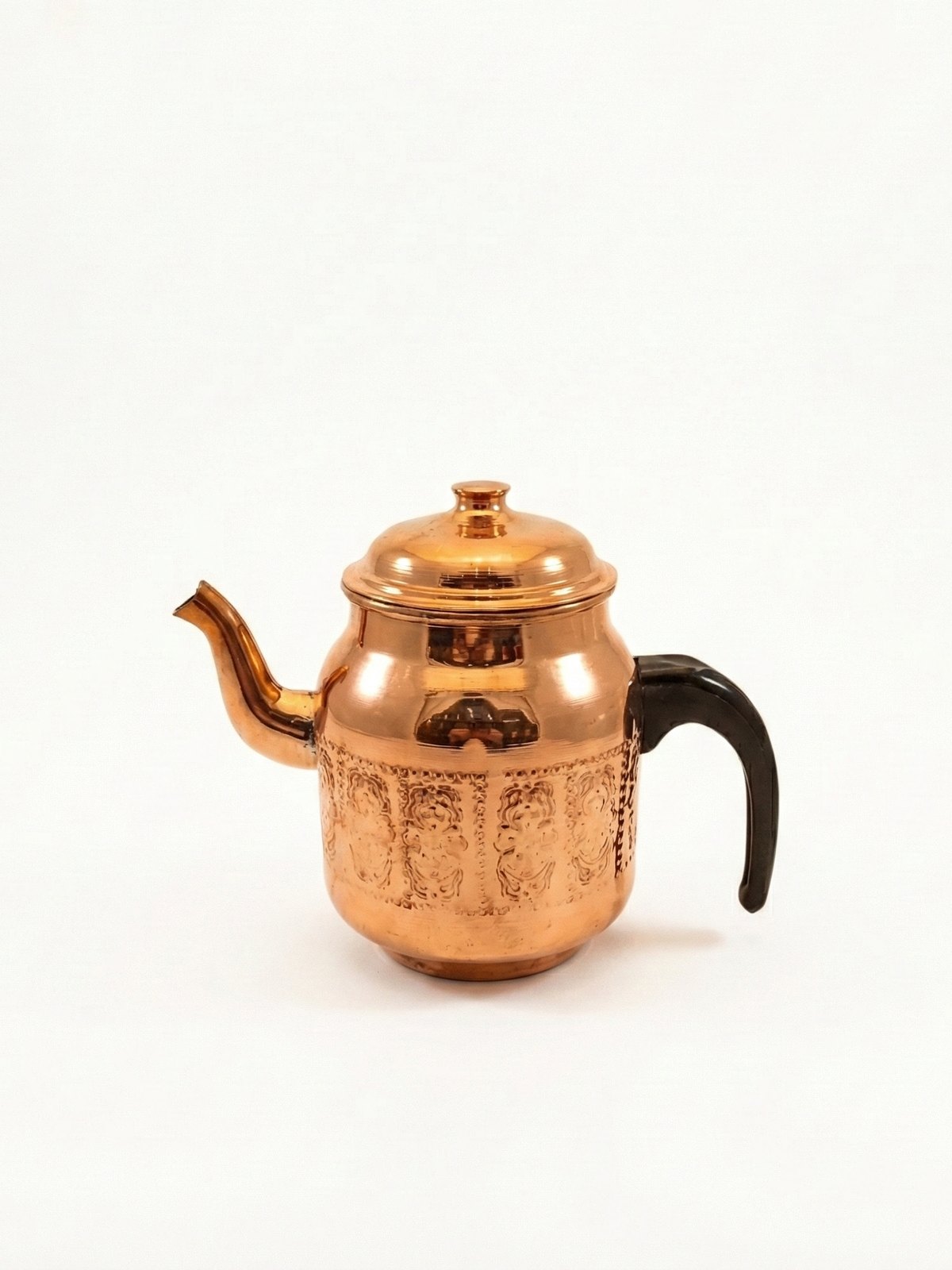 1.4 L
1.4 LCopper Samovar Teapot 1.4 L (Coffeehouse Style)
1.4 L
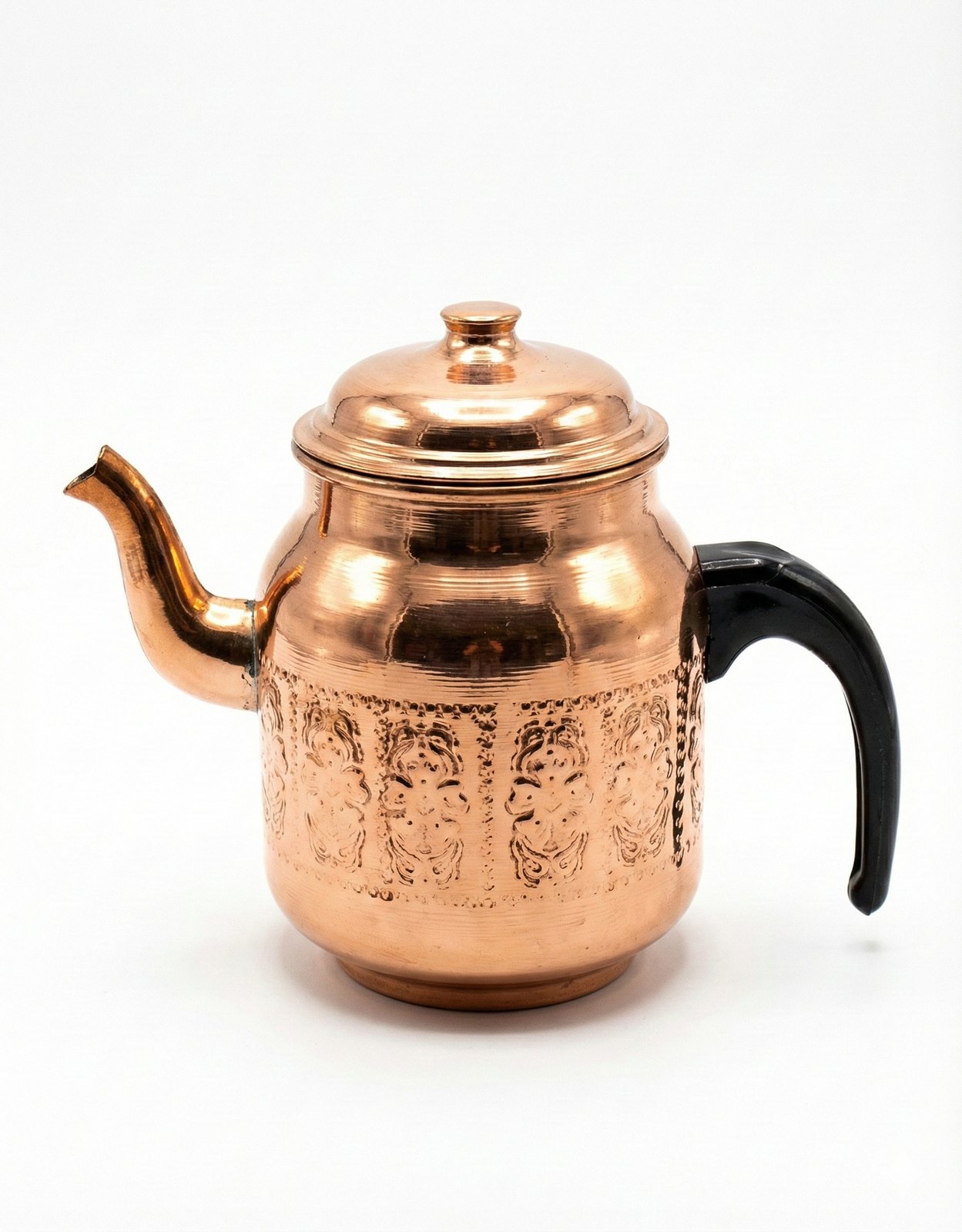 2 L
2 LCopper Samovar Teapot 2 L (Coffeehouse Style)
2 L
Frequently asked questions
Can a copper samovar be re-tinned?
Yes. Our samovars come tin-lined on the inside surface that touches water. If the tin wears over time, a tinsmith can re-tin it.
How do I know the tin is worn?
Reddish copper colour showing through the silvery tin on the inside is a sign the tin is getting thin.
Is the outside tinned too?
No. The tin is on the inside; the outside is copper. Polished models can be polished, antique and oxidised finishes are only wiped with a dry cloth.